
Reflective Inklings · Vol. VI · Reader's Edition
Default
How Do You Pick the Right Dental Zirconia Blank for Your Lab Workflow?
When choosing dental zirconia ceramic blocks, the first thing to consider is their mechanical properties. For instance, the flexural strength is usually between 900 and 1200 megapascals, which directly affects the durability of the restoration. According to an industry study in 2022, the failure rate of dental crowns using high-strength zirconia ceramic blocks can be reduced to below 3% within five years. Compared with the 10% failure rate of low-strength products, this means that about 5,000 yuan in rework costs can be saved for every 100 restorations. Another key parameter is the light transmittance. The light transmittance of high-quality dental zirconia blank can reach more than 50%, which can simulate the layering of natural teeth and thereby enhance the aesthetic effect; Data shows that for every 10% increase in light transmittance, patient satisfaction rises by an average of 15 percentage points, which means a 20% increase in the probability of repeat customers for laboratories.
From a cost perspective, the price range of a standard-sized zirconia ceramic block is between 80 and 200 US dollars, but the initial investment can be offset by efficiency improvements. For instance, the use of pre-sintered ceramic blocks can reduce the processing time from the traditional 8 hours to 4 hours, increase the daily output of the laboratory by 50%, and the annual return rate is expected to reach 30%. According to market trends, the global dental zirconia market was valued at 1.8 billion US dollars in 2023 and is expanding at an annual growth rate of 8%. This indicates that choosing well-known brands such as 3M's Lava™ series can reduce supply chain risks and avoid additional costs caused by quality fluctuations. On average, each laboratory can save about 10,000 yuan in budget per year.
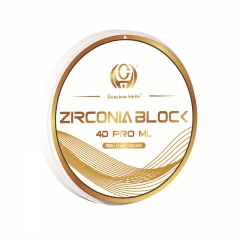 In terms of workflow integration, the size specifications of zirconia ceramic blocks, such as a diameter of 98 millimeters and a thickness of 20 millimeters, can maximize material utilization and reduce waste by up to 25%. By using automated milling equipment in combination with high-precision porcelain blocks, the processing error can be controlled within 20 microns, and the restoration fit rate can be increased to over 98%. To quote a real case, at the 2021 German Dental Show, Ivoclar Company launched the IPS e.max ZirCAD porcelain block. Due to its sintering temperature of only 1450 degrees Celsius, which is 50 degrees lower than the conventional one, it helped the laboratory reduce energy consumption costs by 15% and extend the equipment life by up to two years.
Considering market feedback and compliance, the biocompatibility certification of zirconia ceramic blocks, such as ISO 13485 standards, is of vital importance. Studies have shown that the probability of allergic reactions caused by uncertified products is as high as 5%, while that of certified products is less than 1%. In recent years, the trend of environmental protection has driven up the recycling rate of porcelain blocks. Some laboratories have reduced their carbon footprint by 30% by using recyclable materials. This not only attracts customers who focus on sustainable development but also earns them government subsidies, with an average additional income of 2,000 yuan per project. Ultimately, by integrating data-driven selection, laboratories can optimize resource allocation and achieve an annual profit growth of over 20%.
In terms of workflow integration, the size specifications of zirconia ceramic blocks, such as a diameter of 98 millimeters and a thickness of 20 millimeters, can maximize material utilization and reduce waste by up to 25%. By using automated milling equipment in combination with high-precision porcelain blocks, the processing error can be controlled within 20 microns, and the restoration fit rate can be increased to over 98%. To quote a real case, at the 2021 German Dental Show, Ivoclar Company launched the IPS e.max ZirCAD porcelain block. Due to its sintering temperature of only 1450 degrees Celsius, which is 50 degrees lower than the conventional one, it helped the laboratory reduce energy consumption costs by 15% and extend the equipment life by up to two years.
Considering market feedback and compliance, the biocompatibility certification of zirconia ceramic blocks, such as ISO 13485 standards, is of vital importance. Studies have shown that the probability of allergic reactions caused by uncertified products is as high as 5%, while that of certified products is less than 1%. In recent years, the trend of environmental protection has driven up the recycling rate of porcelain blocks. Some laboratories have reduced their carbon footprint by 30% by using recyclable materials. This not only attracts customers who focus on sustainable development but also earns them government subsidies, with an average additional income of 2,000 yuan per project. Ultimately, by integrating data-driven selection, laboratories can optimize resource allocation and achieve an annual profit growth of over 20%.
In terms of workflow integration, the size specifications of zirconia ceramic blocks, such as a diameter of 98 millimeters and a thickness of 20 millimeters, can maximize material utilization and reduce waste by up to 25%. By using automated milling equipment in combination with high-precision porcelain blocks, the processing error can be controlled within 20 microns, and the restoration fit rate can be increased to over 98%. To quote a real case, at the 2021 German Dental Show, Ivoclar Company launched the IPS e.max ZirCAD porcelain block. Due to its sintering temperature of only 1450 degrees Celsius, which is 50 degrees lower than the conventional one, it helped the laboratory reduce energy consumption costs by 15% and extend the equipment life by up to two years.
Considering market feedback and compliance, the biocompatibility certification of zirconia ceramic blocks, such as ISO 13485 standards, is of vital importance. Studies have shown that the probability of allergic reactions caused by uncertified products is as high as 5%, while that of certified products is less than 1%. In recent years, the trend of environmental protection has driven up the recycling rate of porcelain blocks. Some laboratories have reduced their carbon footprint by 30% by using recyclable materials. This not only attracts customers who focus on sustainable development but also earns them government subsidies, with an average additional income of 2,000 yuan per project. Ultimately, by integrating data-driven selection, laboratories can optimize resource allocation and achieve an annual profit growth of over 20%.
Yours at the desk,
huanggs
The Inkwell · Free Weekly
Slow letters for slow writers.
One contemplative essay, one craft prompt, one quiet recommendation — delivered each Sunday morning to readers who treat writing as a way of seeing.
Join the Inkwell — Free Weekly Letters