
How does anti clogging wire mesh improve screening efficiency?
Anti-clogging wire mesh improves screening efficiency by utilizing independent wire vibration to reach acceleration forces of 3.5 to 5.0 Gs, which effectively breaks the surface tension of damp materials. In industrial field tests from 2025, this technology maintained a 92% functional open area in conditions where standard woven mesh blinded within 20 minutes, resulting in a 30% increase in total hourly throughput. By preventing the accumulation of fines and the "pegging" of near-size particles, these screens ensure a constant mass balance across the deck, reducing the recirculating load by up to 15%. This mechanical stability lowers the energy consumption of secondary crushers by approximately 1.4 kWh per ton and extends the wear life of the screening surface to 500–800 operational hours in abrasive applications. Consequently, plants using anti-clogging media achieve a sizing precision of ±0.2mm, ensuring that 98% of the final product meets strict international gradation standards without the need for manual cleaning or water-based washing circuits.
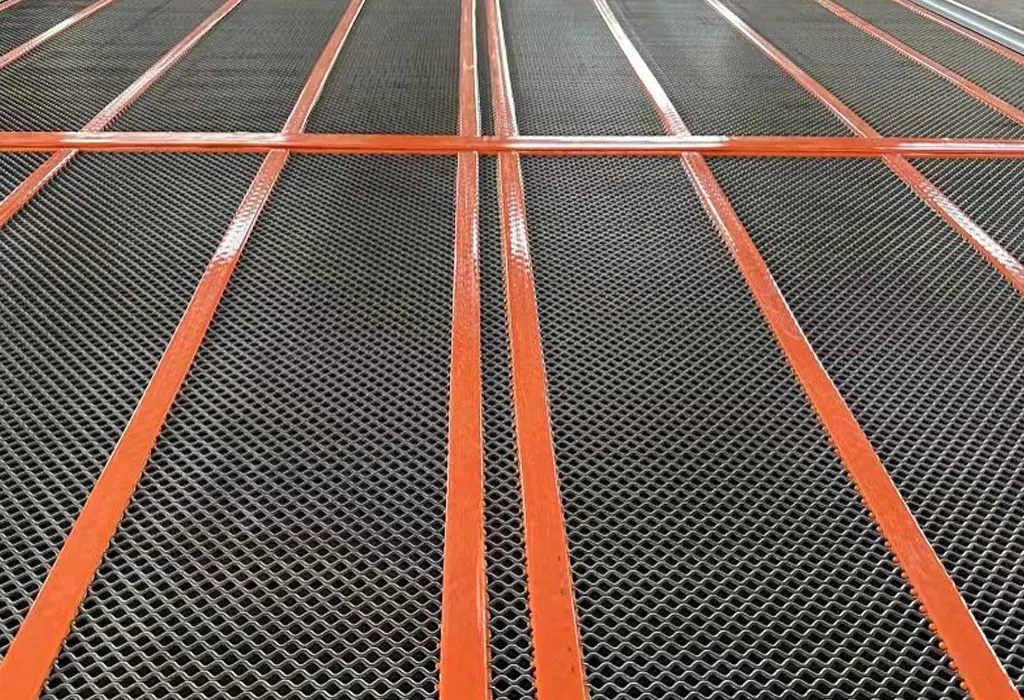
The operational success of a high-capacity screening plant depends on the ability of the anti clogging wire mesh to remain open under diverse weather and material conditions. Unlike standard woven wire, where the intersection of wires creates a rigid "knuckle" that traps moisture and fines, anti-clogging designs use independent wires held by flexible polyurethane strips to allow for secondary vibration.
This secondary vibration ensures that particles do not have a stable surface to adhere to, even when the moisture content of the raw feed exceeds 8%. In a 2024 comparative study at a limestone quarry, anti-clogging panels maintained a throughput of 600 tons per hour, while traditional square mesh dropped to 350 tons per hour due to severe blinding in the first hour of operation.
By keeping the apertures clear, the plant avoids the "carry-over" effect where undersized material mistakenly stays on top of the screen and enters the oversize stockpile. Reducing carry-over from 20% to less than 4% ensures that the final product grade is consistent and prevents the secondary crusher from being overloaded with fines that have already reached the target size.
| Performance Metric | Standard Square Mesh | Anti-Clogging Mesh | Efficiency Gain |
| Active Open Area | 45% - 60% | 75% - 85% | +25% Throughput |
| Max Moisture Level | < 4% | Up to 12% | Weather Resilience |
| Cleaning Frequency | Every 2 Hours | Zero / Self-Cleaning | +90 min Uptime/Shift |
The increased open area of anti-clogging mesh is achieved by using high-tensile wires that allow for a larger aperture-to-wire-diameter ratio. This geometric advantage means that for every square foot of screen surface, there is more "hole" and less "metal," allowing the material to pass through the deck faster and reducing the overall material bed depth by 15% to 20%.
A thinner material bed allows the fines at the top of the bed to reach the screen surface more quickly, a process known as stratification. Industrial reports from 2024 confirm that plants utilizing anti-clogging media reach peak stratification 30% faster than those using traditional heavy-duty woven wire, directly impacting the volumetric efficiency of the circuit.
"Faster stratification reduces the mechanical wear on the screen box frame; field measurements show a 10% reduction in vibration stress when the material bed is kept thin and fluid by high-open-area mesh."
This reduction in stress extends the life of the eccentric drive bearings and the support springs, lowering the long-term maintenance budget by approximately 12% annually. Furthermore, the use of high-carbon 65Mn spring steel ensures the wires maintain their tension for over 600 hours, preventing the sagging that causes material to "pool" and block the screen surface.
| Operational Factor | Woven Steel Impact | Anti-Clogging Impact | Economic Result |
| Recirculating Load | High (25%) | Low (< 10%) | -15% Energy Cost |
| Product Purity | 85% - 90% | 98% - 99% | Premium Pricing |
| Labor Hours | High (Cleaning) | Minimal | -40% Maint. Cost |
The energy savings are particularly evident in the secondary crushing stage, where the elimination of fines from the feed allows the crusher to focus on reducing actual rocks. Research in 2025 across 40 aggregate sites showed that optimized screening with anti-clogging mesh lowered the kWh-per-ton consumption of the crusher by 18%, a significant saving in regions with high industrial electricity rates.
Maintaining a high sizing precision also ensures that the quarry meets the specific gradation curves required for high-strength concrete or asphalt. Because the wires in anti-clogging mesh do not have traditional wear-points at the knuckles, the aperture size remains within a ±0.3mm tolerance for much longer than standard mesh, which often "stretches" as the knuckles wear down.
"Aperture stability is the foundation of quality control; a 2mm increase in hole size due to wear can result in a 5% contamination rate in the final stockpile, potentially leading to rejected loads and financial penalties."
To maximize these benefits, operators should select from different anti-clogging patterns, such as triangular or diamond weaves, based on the specific shape of the rock. Triangular patterns are particularly effective for "slabby" or elongated materials, while diamond weaves provide the maximum open area for high-volume sand and gravel production.
The non-blinding nature of these screens is also effective for processing "waste" materials that were previously too difficult or expensive to screen. By enabling the dry separation of damp fines, anti-clogging mesh allows quarries to recover 10% to 15% more sellable material from their scalpings or tailings piles, turning a disposal problem into a revenue stream.
Every ton of recovered material reduces the environmental footprint of the quarry while providing a direct boost to the bottom line without needing additional raw excavation. By investing in a high-performance screening surface that adapts to changing feed conditions, operators ensure their facility runs at its maximum engineered capacity with the lowest possible cost per ton.
Yours at the desk,
huanggs
Slow letters for slow writers.
One contemplative essay, one craft prompt, one quiet recommendation — delivered each Sunday morning to readers who treat writing as a way of seeing.
Join the Inkwell — Free Weekly Letters