
Reflective Inklings · Vol. VI · Reader's Edition
Default
Why choose an industrial walk behind floor scrubber for warehouse cleaning efficiency?
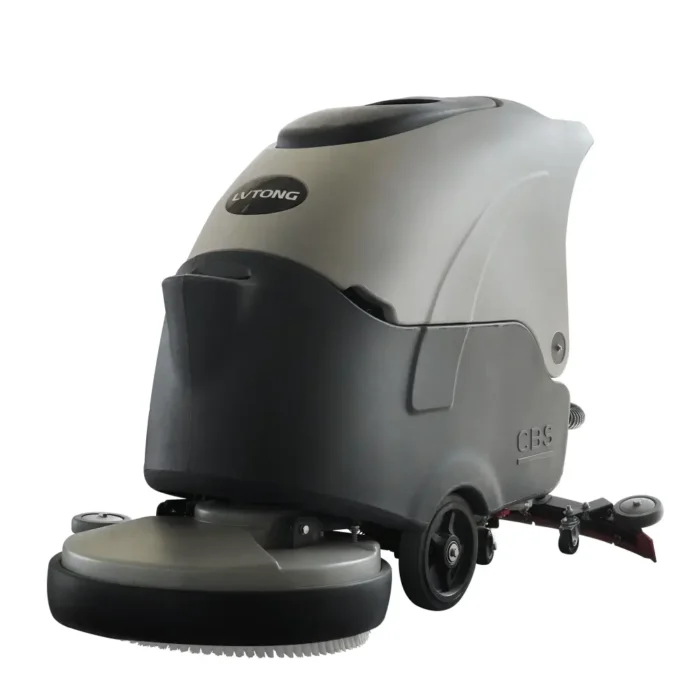 When examining the total cost of ownership and return on investment, its economic viability becomes even more pronounced. The initial purchase price of an industrial-grade device is approximately twice that of a standard commercial model, but its design life is up to 10 years and the average annual maintenance cost is 40% lower. More importantly, it can replace the labor load of 5 to 8 full-time cleaners. Take a medium-sized distribution center as an example. The annual labor cost savings can reach 70,000 to 100,000 US dollars, which enables the equipment investment to usually be recovered within 12 to 18 months, with an investment return rate exceeding 150%. In addition, its large-capacity water tank (with a clear water/sewage tank often reaching 100 liters) and a battery life of up to 8 hours support a single coverage area of over 5,000 square meters, significantly reducing the unit consumption costs of water, electricity and cleaning agents, and cutting the monthly cleaning budget by more than 30%.
Under the framework of intelligent warehousing and lean management, modern industrial walk behind floor scrubber for warehouse is a node for the integration of data and automation. Through the Internet of Things module, managers can monitor key performance indicators such as clean area, fuel consumption or power consumption, and equipment utilization rate in real time, achieve preventive maintenance, and reduce unexpected downtime by 70%. For instance, in its case study of intelligent warehouses, Kuekuen pointed out that by integrating the working data of floor scrubbers into the warehouse management system, the cleaning routes were optimized and intelligently avoided from the AGV operation routes, thereby increasing the overall operational efficiency by another 5%. Choosing it is not merely about selecting a cleaning device, but also about choosing a quantifiable, optimizable strategic solution that can directly support the efficient, safe and low-cost operation of core warehousing business.
When examining the total cost of ownership and return on investment, its economic viability becomes even more pronounced. The initial purchase price of an industrial-grade device is approximately twice that of a standard commercial model, but its design life is up to 10 years and the average annual maintenance cost is 40% lower. More importantly, it can replace the labor load of 5 to 8 full-time cleaners. Take a medium-sized distribution center as an example. The annual labor cost savings can reach 70,000 to 100,000 US dollars, which enables the equipment investment to usually be recovered within 12 to 18 months, with an investment return rate exceeding 150%. In addition, its large-capacity water tank (with a clear water/sewage tank often reaching 100 liters) and a battery life of up to 8 hours support a single coverage area of over 5,000 square meters, significantly reducing the unit consumption costs of water, electricity and cleaning agents, and cutting the monthly cleaning budget by more than 30%.
Under the framework of intelligent warehousing and lean management, modern industrial walk behind floor scrubber for warehouse is a node for the integration of data and automation. Through the Internet of Things module, managers can monitor key performance indicators such as clean area, fuel consumption or power consumption, and equipment utilization rate in real time, achieve preventive maintenance, and reduce unexpected downtime by 70%. For instance, in its case study of intelligent warehouses, Kuekuen pointed out that by integrating the working data of floor scrubbers into the warehouse management system, the cleaning routes were optimized and intelligently avoided from the AGV operation routes, thereby increasing the overall operational efficiency by another 5%. Choosing it is not merely about selecting a cleaning device, but also about choosing a quantifiable, optimizable strategic solution that can directly support the efficient, safe and low-cost operation of core warehousing business.Yours at the desk,
huanggs
The Inkwell · Free Weekly
Slow letters for slow writers.
One contemplative essay, one craft prompt, one quiet recommendation — delivered each Sunday morning to readers who treat writing as a way of seeing.
Join the Inkwell — Free Weekly Letters