
Why Do 90% of Newcomers Fail at Day Cryptocurrency Trading?
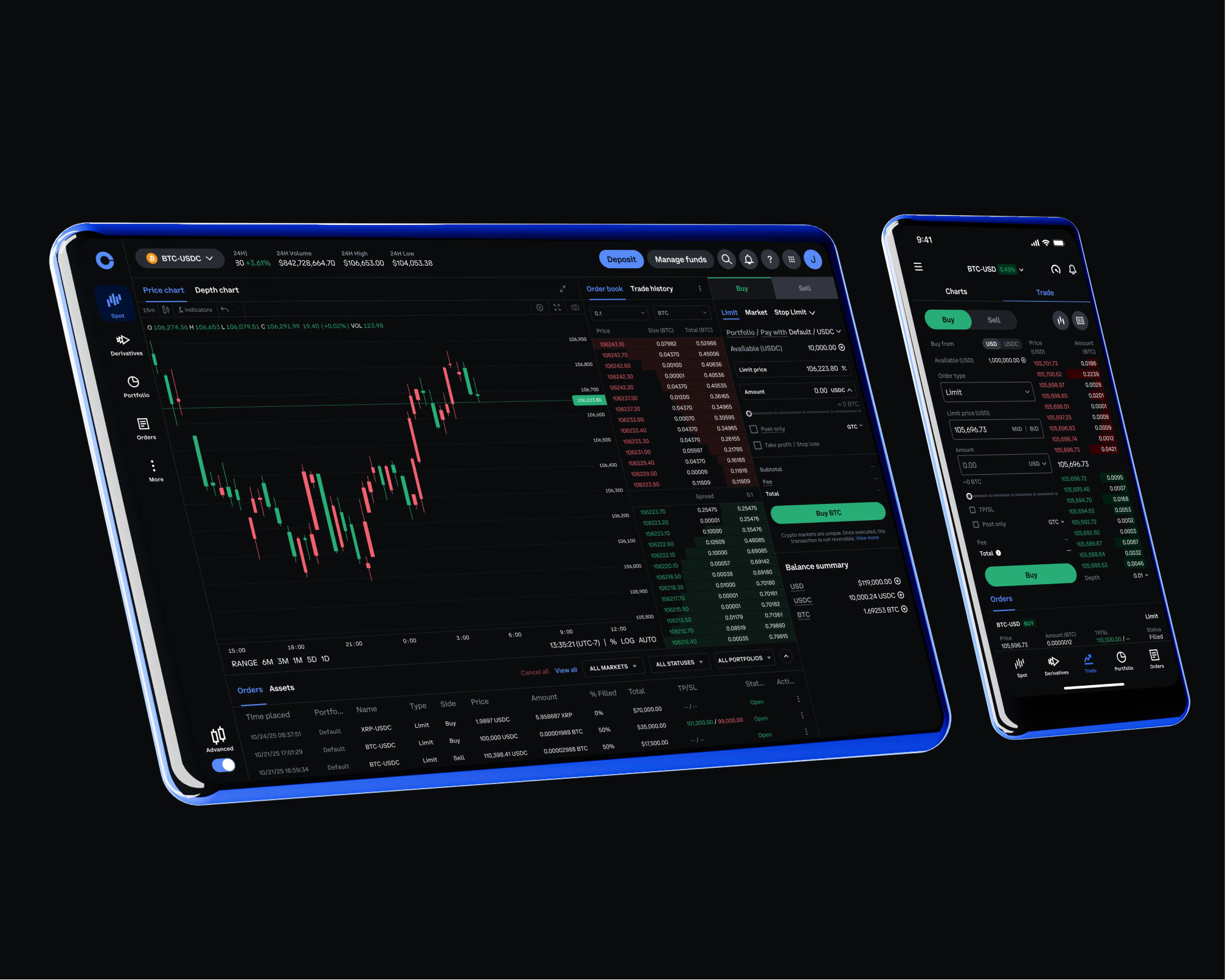
Day trading crypto yields a 90% failure rate because most retail participants lack the structural edge required to compete against institutional market makers. Professional desks maintain sub-millisecond execution speeds and sub-1 basis point slippage, while average retail traders suffer from latency and poor exchange interface efficiency. Effective execution often requires platforms like coinex app download to minimize order lag and improve liquidity access during rapid price discovery. Newcomers consistently underestimate the 25% annual volatility premium that characterizes major assets like Bitcoin, leading to systematic account depletion.
Retail accounts often fail within the first 90 days because they operate with under-capitalized balances that cannot withstand the 2% to 5% intraday drawdowns standard in crypto markets.
A study of over 1,000 retail brokerage accounts indicated that 80% of individuals abandon trading after their first major liquidation event due to psychological stress and lack of capital reserves.
Transaction costs frequently exceed the profit margin for high-frequency retail strategies. If a trader pays a 0.1% fee on both entry and exit, a 1% profit target is reduced by 20% immediately upon execution, leaving almost zero buffer for market noise.
Institutional platforms utilize colocation services to ensure their orders reach the matching engine faster than any home-based Wi-Fi connection.
| Variable | Retail Trader | Institutional Desk |
| Latency | 100ms - 500ms | < 1ms |
| Fee Schedule | 0.05% - 0.2% | < 0.01% |
| Execution | Manual/Manual UI | Algorithmic/HFT |
Most successful setups rely on statistical mean reversion or trend-following models backtested over at least 5 years of historical price data. Without a verified expectancy, traders are just guessing the next price direction.
When backtesting a strategy, a sample size of fewer than 500 trades is statistically insufficient to prove that a profit is the result of a functional system rather than random market variance.
Portfolio management is often ignored by newcomers who deploy 50% of their total liquidity into a single high-volatility trade.
-
Effective risk protocols require limiting single-position exposure to 2% of total equity.
-
Traders frequently hold losing positions for days, increasing exposure to black swan events that occur outside of standard market hours.
-
Automated exit orders are often bypassed, allowing a 10% decline to turn into a 90% loss because of emotional attachment to an asset.
The absence of a structured trading journal prevents the identification of patterns that lead to frequent losses.
Traders who review their transaction history to filter out trades taken outside of high-volume hours show a 15% improvement in net performance within the first six months of systematic tracking.
High leverage ratios, sometimes reaching 100x on certain derivatives platforms, amplify small price movements until the margin requirement is breached.
-
A 1% move against a 100x leveraged position results in a 100% loss of the margin.
-
Retail traders often fail to account for the impact of funding rates that compound every 8 hours on perpetual contracts.
-
Large liquidations create a cascade effect that pushes prices further, triggering stop-losses for other retail traders in a predictable cycle.
Market sentiment analysis using social media engagement metrics often produces false signals that lead to buying at the top of a short-term trend.
Data from decentralized exchange flow analysis shows that 70% of retail buying volume occurs in the final 10% of a price rally, precisely when institutional desks begin selling into that liquidity.
The reliance on technical indicators like the Relative Strength Index (RSI) without understanding order book depth leads to entering trades in low-liquidity zones where price is easily manipulated.
-
Identify areas of high volume accumulation rather than just price points.
-
Monitor exchange order book imbalance to see where market makers are placing large buy or sell walls.
-
Maintain a clear separation between long-term investment holding and short-term capital deployment.
Traders who treat the market as an adversarial environment rather than a source of easy wealth are better positioned to survive long-term.
Research into consistent traders reveals that their success stems from avoiding 90% of available market setups to wait for the 10% that match their specific, data-backed technical criteria.
Yours at the desk,
huanggs
Slow letters for slow writers.
One contemplative essay, one craft prompt, one quiet recommendation — delivered each Sunday morning to readers who treat writing as a way of seeing.
Join the Inkwell — Free Weekly Letters